
Difficult Ayahuasca Ceremony? Why Healing Gets Harder First
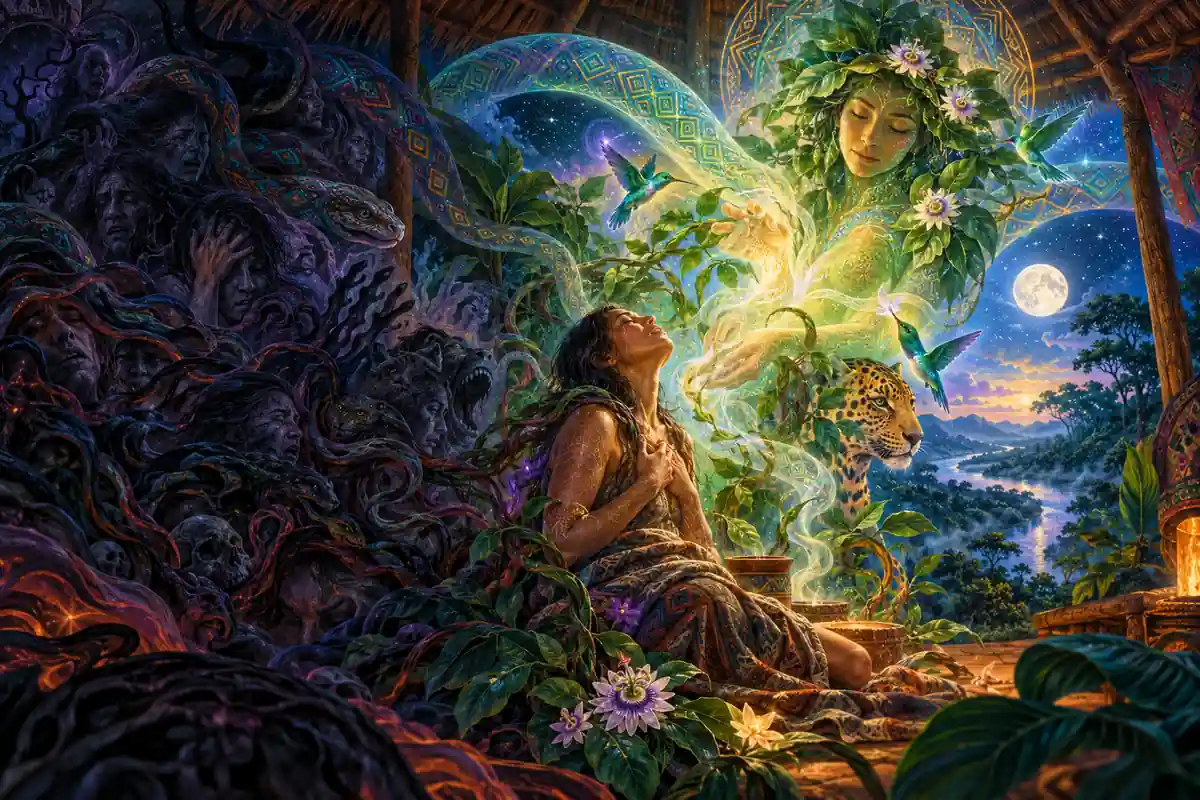
Most people come to ayahuasca hoping for relief. Sometimes what they get instead is a night of fear, confusion or grief, or several of those nights in a row, and it's natural to start wondering whether the medicine is working at all.
A difficult ayahuasca ceremony doesn't mean the medicine isn't working, and it doesn't mean you did something wrong. In our experience since 2010, hard ceremonies, sometimes several in a row, are a normal part of the process, and for many people they come before the clearest healing of their stay. But a difficult night is not proof that healing is happening, and some reactions call for help rather than patience.
I describe this pattern, and the others we see regularly, in the section on a series of difficult ceremonies ending in a breakthrough in my longer guide to working with ayahuasca. This article looks at why it happens, what research says about difficult experiences, and where the limits are.
Hard ceremonies are common
Some people call a night like this a "bad trip". We don't. That's the language of recreational drug use, and ayahuasca is a medicine with a long tradition of healing. As the ICEERS psychologist David Londoño puts it, the work of master plants "is work, not a trip". He also notes that many healers in Peru simply call ayahuasca la purga, the purge, because for them the cleansing matters more than the visions [5].
Many people come to ayahuasca after reading stories of lives changed in one or two nights. That does happen. It happened to me. But my rough impression over the years is that only a small percentage of people, perhaps 2 to 3%, experience that kind of radical change in their first three ceremonies. For most people, healing with ayahuasca unfolds over time, and some of that time is uncomfortable.
Research reflects this. In a small randomised placebo-controlled trial of ayahuasca for treatment-resistant depression (29 patients, one dose each), every patient reported feeling safe, yet the session "was not necessarily a pleasant experience," and some described much psychological distress. About 57% vomited, which the authors note is traditionally understood as purging rather than a side effect. The same trial found significant antidepressant effects in the week after dosing [4].
The difficulty doesn't always end when the ceremony does. In the Global Ayahuasca Survey, about 55% of the nearly 8,000 people who answered its mental health questions reported adverse mental health effects in the weeks or months after drinking, yet around 88% of them saw those effects as part of a positive process of growth or integration [2]. That's about the period after ceremony, not the night itself, but it shows that struggling for a while afterwards is common. I cover what that looks like in our article on why the weeks after a ceremony can feel worse.
A run of hard nights, then one that changes everything
Of all the patterns I've observed since 2010, this is the hardest one for the person going through it. The ceremonies are unpleasant. They're hard and confusing, with little or no understanding of what's happening or why. There's no sense of contact with the spirit of ayahuasca and no sense that anything useful is happening. The following days bring no clear relief. Just one difficult experience after another.
Then, in one night, everything changes. People describe that ceremony in many different ways, but "deeply insightful" covers most of them. Afterwards they know their life is going to be better. When they come to breakfast the next morning, it's obvious to everyone at the table. People start exclaiming: "Look at her face! She looks so different." "Girl, you are just lit up!"
Looking back, the hard ceremonies that came before were a neccesary part of that person's process. That's the honest view from watching it happen many times, not a guarantee.
A related pattern shows up only in our three- and four-week programs, where guests have usually been struggling with something for 15 years or more. We tell them before they arrive that their first one to four ceremonies may be hard without any clear benefit. At some point there's a shift, and they start to believe life really can be better. A few good ceremonies follow. Then, suddenly, one is harder and different from anything before: usually purely physical, with no visions, no insight, no sense of healing. Many describe it as dark, even sinister or evil, and take it as a sign that their work with ayahuasca is over. I've often watched guests make real progress after a night like that, so I read it as deep work preparing the ground for the next stage, not a setback.
Struggle sometimes takes the form of a fight. A few times a year, someone battles for three or four ceremonies against something inside them that doesn't want to leave. One man said he felt he was fighting for his life and his energy was running out. When he had nothing left and simply gave up, everything changed: it became easy, peaceful and beautiful.
A hard ceremony is not proof of healing
Before going further, an honest caution. Staying with the process through a series of hard ceremonies is one of the biggest challenges people face. You're suffering now for a healing that might come later, and nobody can honestly guarantee it.
Some people decide to stop, and that choice deserves respect. In my experience most of the people who continue are glad they did. Most, not all. Some people don't get what they hoped for, and I don't have a clear explanation for why.
Research adds its own warning. A 2023 study of 608 people who already reported extended difficulties after psychedelic use found that, within that group, difficulties after ayahuasca, DMT and LSD lasted longer on average than after other substances. That can't tell us how common such problems are, only that they happen. A more challenging experience predicted longer-lasting difficulties. Some participants felt significantly harmed and regretted ever taking psychedelics [3]. The same study notes that people with childhood trauma may be more vulnerable when traumatic memories resurface.
Hard during the ceremony is one thing. Struggling to function afterwards is another. If you notice any of these, during the retreat or after it, get urgent medical help straight away (emergency services, or the retreat's medical support) and tell the facilitators:
- Thoughts of harming yourself or ending your life
- Losing touch with what's real, or beliefs that frighten the people around you
- Days without sleep, or agitation that keeps building
If panic, low mood or disconnection isn't easing in the weeks after you get home, see a mental health professional soon rather than waiting it out. Our integration article has a fuller guide on when to seek help, and what kind. Needing support after a retreat isn't a failure. If you're living with depression, trauma or another mental health condition, please work with a qualified health professional alongside any decision about ayahuasca.
Why healing might get harder before it gets better
The way I explain this to guests is with an onion. In the healing tradition we work in, the first couple of ceremonies are usually about cleansing the physical and energetic bodies. As healing happens, it opens doors to parts of you that were blocked or out of reach. Each layer that comes off reveals the next, and after the very beginning the process is rarely linear. Removing one layer can expose several issues that need attention. In that worldview, the spirits working with the medicine see what needs doing even when you don't.
So in this view, a hard ceremony after a good one doesn't mean something went wrong. Often something deeper is coming up, and for some guests it seems rooted in very early life. Several ceremonies may pass while the same layer is being worked on. You don't need to accept the spiritual framework for this to make sense. The model describes something people report again and again: what surfaces first isn't always what lies deepest.
Research offers a few pieces that fit, without proving the model. These studies mostly concern psychedelics in general, not ayahuasca ceremonies, and show associations, not cause and effect:
- A 2025 review of how psychedelics may relieve depression reports that, in recent studies, emotional breakthrough, the felt release of an emotional blockage, predicted therapeutic outcomes more strongly than mystical-type experiences [1]. The experiences that matter most may be emotional, not pleasant.
- A 2024 study of challenging psychedelic experiences, mostly from an online survey, found that challenges involving grief, despair or a sense of dying were more often linked with emotional breakthrough. Intense fear was less likely to be. People who met the difficulty with acceptance, or who reached out for support and talked about what they were going through, tended to report more breakthrough. The authors suggest that fear drives avoidance, which can get in the way of processing what comes up [6].
- Reviewing earlier research, a 2023 study notes that many people later describe their hardest psychedelic experiences as valuable, and that in one study the difficulty of an experience correlated with how much personal meaning people took from it [3].
The finding about fear and acceptance links to the idea of surrender, which I describe in the section on surrender of the main guide. Surrender isn't needed when a ceremony is beautiful. It matters when the ceremony is hard. And surrender doesn't mean going through it alone: asking for help, and talking about it afterwards, is part of letting go. For practical ways to cope in the moment, see 14 Keys to a Better Ayahuasca Retreat, and for the most frightening version of this, the loss of a sense of self, see Ego Dissolution.
What's on the other side
My own healing came this way. I had lived with depression for 30 years. In my third ceremony, the last of it was removed, and it was very unpleasant while it happened. Actually, that's an understatement. It was hellish and horrific. When the process finished, I was flooded with joy and so happy to be alive. I have never been depressed since.
I've watched versions of that happen for other people ever since. A phrase I've heard more times than I can count: "I finally surrendered, and as soon as I did, everything changed. It got so much easier."
For guests who stay longer term and really engage with the work, I'd estimate that around 80 to 90% experience lasting positive change in their lives. That's my own impression from our guests, not a measured result or a success rate for everyone who drinks. Sometimes the change isn't even obvious at the retreat. Several people have written to me months later to say that, without any big breakthrough, their lives had quietly started running better: calmer minds, better choices, more responding and less reacting. I look at that slower kind of change in Ayahuasca Didn't Change My Life? Why Benefits Can Come Later.
Looking back on my own life, what I've learned is that there was never anything wrong with us, other than our belief that there was something wrong with us. Those beliefs can be changed. Hard ceremonies are often where that change gets made.
Frequently asked questions
Can a difficult ayahuasca ceremony cause lasting harm?
It can. Research describes people whose problems lasted months or longer, and among people who reported extended difficulties, ayahuasca was one of the substances linked with the longest-lasting ones. The same study found that taking psychedelics in an unguided setting predicted a wider range of difficulties [3], which is one reason honest screening and an experienced team matter.
Does a difficult ayahuasca ceremony mean it's working?
Not necessarily. In our experience, hard ceremonies often come before real healing, and research links emotional breakthroughs, rather than pleasant experiences, with better outcomes. But difficulty on its own proves nothing, and some people come out of hard experiences with problems that need care.
Why was my ayahuasca ceremony so dark after a good one?
In the tradition we work in, this is understood as a deeper layer coming up, sometimes from very early life. I've often seen guests move forward afterwards, but no one can tell from the difficulty alone what a particular night means. It's a common pattern, not a sign that you did something wrong. If it was your second ceremony, I cover that pattern in Why Your Second Ayahuasca Ceremony Was So Hard.
Should I stop drinking ayahuasca after a difficult ceremony?
That's your decision, and stopping deserves respect. Before drinking again, talk honestly with the facilitators about whether another ceremony is right for you, and if you have a mental health condition or take medication, check with a qualified clinician too. If continuing makes sense, a smaller dose can be a gentler way back in. If you're struggling to cope day to day, stop and get professional support.
How many difficult ayahuasca ceremonies is normal?
There's no fixed number. We tell guests with long-standing problems that their first one to four ceremonies may be hard, and a few people a year struggle for three or four ceremonies before things shift. Every person's process is different and nobody can promise a timeline, but in our experience the shift does come for most people who stay with it.
Hard ceremonies are part of ayahuasca for many people, and in our experience they often lead somewhere very good. The longer guide explains what to realistically expect from a retreat, including the onion model in more depth. Not everyone gets what they came for, but most of the people who stay with the process through the hard nights are very glad they did, and many reach the night when they know their lives are going to be better.
References
- Acero, V. P., Flatt, T. A., Gooch, P. M., et al. (2025). From molecules to meaning: Unpacking the antidepressant mechanisms of psychedelic drugs. Expert Review of Clinical Pharmacology, 18(5), 263–280. https://doi.org/10.1080/17512433.2025.2515866
- Bouso, J. C., Andión, Ó., Sarris, J. J., et al. (2022). Adverse effects of ayahuasca: Results from the Global Ayahuasca Survey. PLOS Global Public Health, 2(11), e0000438. https://doi.org/10.1371/journal.pgph.0000438
- Evans, J., Robinson, O. C., Argyri, E. K., et al. (2023). Extended difficulties following the use of psychedelic drugs: A mixed methods study. PLOS ONE, 18(10), e0293349. https://doi.org/10.1371/journal.pone.0293349
- Palhano-Fontes, F., Barreto, D., Onias, H., et al. (2019). Rapid antidepressant effects of the psychedelic ayahuasca in treatment-resistant depression: A randomized placebo-controlled trial. Psychological Medicine, 49(4), 655–663. https://doi.org/10.1017/S0033291718001356
- Russo, S., & Domsac, I. (2023, May 11). Is there such a thing as a bad ayahuasca trip? [Interview with David Londoño]. ICEERS. https://www.iceers.org/en/news/bad-ayahuasca-trip/
- Wood, M. J., McAlpine, R. G., & Kamboj, S. K. (2024). Strategies for resolving challenging psychedelic experiences: Insights from a mixed-methods study. Scientific Reports, 14(1), 28817. https://doi.org/10.1038/s41598-024-79931-w