
Ayahuasca Didn't Work? Why Some People Feel Nothing
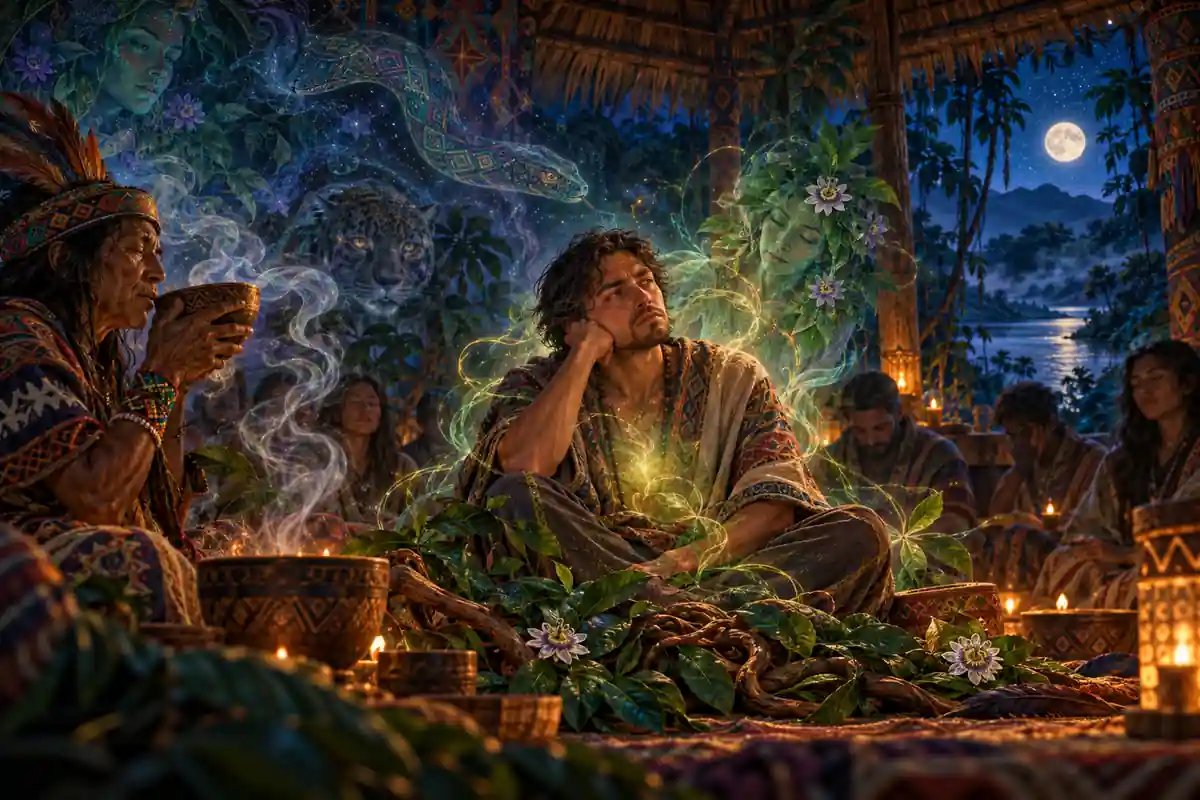
If ayahuasca didn't seem to work for you, you're not alone, and it doesn't mean you did something wrong. In our experience since 2010, roughly one guest in ten feels almost nothing for two or more ceremonies. Many of them have a history of long-term cannabis use or years of medication, though we can't be sure either is the cause. Body chemistry also varies more than most people realise, so the same cup can affect two people very differently.
I describe this pattern, along with the other common ways a retreat can unfold, in the section on ceremonies where nothing seems to happen in my longer guide to working with ayahuasca. This article goes further into why it happens and what to do about it.
No visions is not the same as no effect
A lot of people arrive expecting the visual side of ayahuasca: colours, geometry, scenes. When that doesn't come, they decide the medicine didn't work.
That's often the wrong conclusion. Plenty of ceremonies have no visions at all and still involve a great deal: strong emotion, memories coming back, physical cleansing, a quiet insight about a relationship or an old habit. I've written more about this in 14 Keys to a Better Ayahuasca Retreat, under "Will I Have Visions?"
The group this article is really about is different. These are people who feel almost nothing at all, or a very mild effect with no visions. They usually notice something in the body, but not strongly. Feeling mostly sober while everyone around you is clearly affected is frustrating, and it can be upsetting.
What we've seen in people who feel nothing
This pattern has come up for about 10% of the guests who have attended our center. Over the years I've made a point of talking with each of these people about their background. Here's how it breaks down:
- About 70% had been daily marijuana users for a long time.
- About 20% had been on a variety of medications for many years and had weaned off at least a month before the retreat began.
- About 10% had nothing I could identify as a possible reason.
A few cautions about those numbers. They come from my conversations with guests at one center, not from a controlled study. They describe who ended up in the "nothing happens" group, not what caused it, and we haven't compared them with guests who responded strongly. And plenty of long-term cannabis users have strong experiences from the first night.
The more encouraging part is what happens next. I'm going from memory here, not records, but I'd say the majority of these guests do go on to feel the medicine during the retreat. Some reach a level comparable to everyone else; others feel it more lightly. A few never feel much of anything, and most of those were long-term marijuana users.
What can affect how strongly you feel it
Several things can weaken the effect. The research on each is uneven, so I've marked what's established and what's a guess.
Your body chemistry
Ayahuasca is a decoction of plants, traditionally the Banisteriopsis caapi vine with the leaves of Psychotria viridis, and how strongly you feel it depends partly on how your body processes it. Swallowed on its own, DMT does almost nothing, because the enzyme MAO-A breaks it down in the gut and liver. The vine's harmine and harmaline block that enzyme long enough for the DMT to get through [4]. Those compounds are in turn broken down by liver enzymes, including CYP2D6, which varies between people, and researchers have studied fast and slow metabolisers [3]. Whether that explains a quiet ceremony hasn't been shown.
Cannabis and past medication
I haven't found research that tests directly whether heavy cannabis use blunts the effects of ayahuasca. Our practical advice, based on what we keep seeing: if you use cannabis regularly, take a long break before your retreat. We go into more detail on our page about cannabis and ayahuasca preparation.
The medication group is interesting for a different reason. These guests had already stopped their medication, with time to spare, as required. Some research may be relevant, though it's on psilocybin, not ayahuasca. A 2023 survey found that SSRI and SNRI antidepressants seemed to weaken the effects of psilocybin mushrooms, possibly for up to three months after stopping [2]. DMT acts on the same serotonin receptor, so something similar may happen with ayahuasca, but that's still a hypothesis. And our guests had been on many different medications, which won't all behave alike.
What is well established is why centers ask you to stop certain medications in the first place. Combining ayahuasca with serotonergic drugs, including many antidepressants, raises the risk of serious reactions such as serotonin syndrome [1]. A quiet ceremony doesn't mean those risks don't apply to you. Never stop or taper a prescribed medication on your own. How long a safe break takes depends on the drug and on you.
Expectations
The mind plays a large part in how ayahuasca is experienced, in both directions. A placebo-controlled study of ayahuasca retreats points out that expectation alone can produce strong reported effects [7]. In one experiment it cites, 61% of students given a placebo described as a psilocybin-like drug said they felt some effect, while many others reported no change at all [5].
Expectations can shape what people notice and report, but nobody can tell you how much they explain any particular quiet ceremony.
Ayahuasca is also unpredictable. Each ceremony is usually unlike the one before, sometimes so different you might think you'd taken another substance. A quiet first or second night doesn't reliably predict what the fourth or fifth will be like.
What we do when someone feels nothing
A quiet start already gets a second chance on the same night. In every ceremony at our center, people are offered more ayahuasca about an hour and a half in. When someone feels little across ceremonies, the curandero gives them a larger dose and some extra attention and healing during the ceremony. For many people that's enough.
The tobacco purge
When someone has felt very little in their first two ceremonies, we also tell them about a tobacco purge. It's a tea made from mapacho, the strong local tobacco. You drink it, feel terrible, and vomit. It's a traditional Amazonian practice that was once common at many centers, and for four years everyone who came to our center drank tobacco the day before their first ayahuasca ceremony. We ultimately decided most would benefit more from an additional ayahuasca ceremony instead of the tobacco purge.
In the traditional Amazonian view, a person can carry energies that block the work of ayahuasca, ones ayahuasca itself won't clear, and tobacco often can. You don't need to share that view to look at what we've observed. Most people who do the purge say they feel clearly better afterwards, usually much lighter, and many have a clearer ayahuasca experience after it. Not always.
It isn't a casual option. It's very unpleasant, and concentrated tobacco is a large dose of nicotine, which can cause serious poisoning. Nausea and vomiting are early signs of nicotine poisoning, and larger amounts can affect the heart and breathing and can be life-threatening [6]. We're clear about all of this describing the tobacco purge option. After hearing the options, most guests decide against it and rely on larger doses and San Pedro instead.
San Pedro
San Pedro is another option we've seen make a difference. Some people who feel very little from ayahuasca have a significant experience with San Pedro (huachuma) (huachuma). More interestingly, their subsequent ayahuasca ceremonies sometimes seem to open up, as if something blocking the effects has been cleared. That's observation and conjecture, not something we can explain, but we've seen it often enough that it's worth mentioning.
One guest had been on a dedicated spiritual path for 15 years and had taken good care of her body and mind. She felt almost nothing from either ayahuasca or San Pedro, although she did vomit twice during ayahuasca ceremonies, so her body was responding. She kept a positive attitude and kept coming to ceremony. In her sixth ceremony, her fifth with ayahuasca, she had a mystical experience of union with God that she called the most important event of her life. We never know what's going to happen.
If it's happening to you
- Tell the facilitators and the healer exactly what you did and didn't feel. They can't adjust anything if they don't know.
- If more is offered partway through the ceremony and you've felt little, consider taking it. Beyond that, leave dosing to the healer, and don't take any other substance to "help it along".
- Be honest about your history if you weren't fully honest on your intake form. Cannabis use and past medications are exactly what the team needs to know.
- Don't compare your night with anyone else's. You're under no obligation to continue. If you do, tell the team first about any health concerns.
If you're still preparing for a retreat and any of this sounds like you, the best things you can do are to stop cannabis well in advance, follow your center's preparation guidelines thoroughly, and disclose your full medication history. If you're dealing with depression or another mental health condition, please work with a qualified health professional alongside any decision about ayahuasca.
Frequently asked questions
Is it normal to feel nothing on ayahuasca the first time?
It's not rare. In our experience since 2010, about 10% of guests feel very little for two or more ceremonies. Most of them were long-term cannabis users or had come off years of medication before the retreat.
Does marijuana affect ayahuasca?
We suspect it can. About 70% of the guests who felt almost nothing were long-term daily cannabis users. That's an observation from one center, not a research finding, and many cannabis users still have strong experiences. A long break before your retreat is a sensible precaution.
Should I drink more ayahuasca if I don't feel anything?
At our center, more is offered about an hour and a half into every ceremony, and if you've felt little it's reasonable to take it. Beyond that, let the healer decide. They know their medicine and can see how you're responding.
If I don't have visions, is ayahuasca still working?
Often, yes. Many ceremonies involve emotion, memories, physical cleansing or insight with no visual content at all. Feeling almost nothing at all is a different situation, and worth raising with the team.
Can some people just not respond to ayahuasca?
Some people respond much less than others, and in about one in ten of the quiet cases we've seen, there was no obvious reason. Still, in our experience the majority of people who start quietly do go on to feel the medicine, and a few never feel much. No one can predict in advance which it will be.
Feeling nothing in a ceremony is disappointing, but there are several possible explanations, and in our experience it's often temporary. For the full picture of how retreats unfold, see what you might experience during an ayahuasca retreat. Some people only notice changes months afterwards, which I cover in Ayahuasca Didn't Change My Life? Why Benefits Can Come Later. And remember the guest who felt almost nothing for five ceremonies, then had the most important experience of her life in her sixth. A quiet start says very little about where your time with the medicine can lead.
References
- Bouso, J. C., Andión, Ó., Sarris, J. J., et al. (2022). Adverse effects of ayahuasca: Results from the Global Ayahuasca Survey. PLOS Global Public Health, 2(11), e0000438. https://doi.org/10.1371/journal.pgph.0000438
- Gukasyan, N., Griffiths, R. R., Yaden, D. B., Antoine, D. G., & Nayak, S. M. (2023). Attenuation of psilocybin mushroom effects during and after SSRI/SNRI antidepressant use. Journal of Psychopharmacology, 37(7), 707–716. https://doi.org/10.1177/02698811231179910
- Hamill, J., Hallak, J., Dursun, S. M., et al. (2019). Ayahuasca: Psychological and physiologic effects, pharmacology and potential uses in addiction and mental illness. Current Neuropharmacology, 17(2), 108–128. https://doi.org/10.2174/1570159X16666180125095902
- Melani, A., Papini, G., Bonaso, M., et al. (2026). Ayahuasca and its main component N,N-dimethyltryptamine (DMT) for the treatment of mental disorders: Mechanisms of action, clinical studies, and tools to explore the human mind. Biomedicines, 14(3), 506. https://doi.org/10.3390/biomedicines14030506
- Olson, J. A., Suissa-Rocheleau, L., Lifshitz, M., Raz, A., & Veissière, S. P. L. (2020). Tripping on nothing: Placebo psychedelics and contextual factors. Psychopharmacology, 237(5), 1371–1382. https://doi.org/10.1007/s00213-020-05464-5
- Poison Control (National Capital Poison Center). (n.d.). Tobacco and nicotine poisoning. https://www.poison.org/articles/tobacco
- Uthaug, M. V., Mason, N. L., Toennes, S. W., et al. (2021). A placebo-controlled study of the effects of ayahuasca, set and setting on mental health of participants in ayahuasca group retreats. Psychopharmacology, 238(7), 1899–1910. https://doi.org/10.1007/s00213-021-05817-8