
Psychedelics and Mystical Experiences: What the Research Shows

Some people arrive at a mystical experience after decades of contemplative practice. Others arrive at one in a single afternoon, lying on a couch in a clinical trial with an eyeshade and a pair of headphones. The dissolution of the self, a sense of unity with everything, the conviction that something profoundly true has been revealed, psychedelics have made such phenomena more accessible, easier to study, and far harder to dismiss.
What follows is an account of what a mystical experience actually is, how the descriptions converge across cultures and centuries, how psychedelic experiences compare with those reached through prayer and meditation, what the research says about lasting benefit, and the risks worth understanding before seeking one.
In this article
- What Is a Mystical Experience?
- Mystical Experiences Across Cultures and Centuries
- Are Psychedelic Mystical Experiences the Same as Spiritual Ones?
- Why People Seek Mystical Experiences
- What the Research Shows About Mystical Experiences and Healing
- Risks of Seeking Mystical Experiences With Psychedelics
- Integration: Why Psychedelics Are a Tool, Not a Shortcut
- Common Questions
- References
What Is a Mystical Experience?
Most of us move through our days with a fairly stable sense of who we are and where we end and the rest of the world begins. On rare occasions, a profoundly different awareness may arise, of ourselves, the nature of the world around us, and our relation to it. These are often referred to as mystical experiences.
The famous poem "Auguries of Innocence," by William Blake, opens with a description of this kind of experience:
To see a world in a grain of sand
And a heaven in a wild flower,
Hold infinity in the palm of your hand
And eternity in an hour.
A mystical experience can also be something quieter: sitting in a grassy field filled with tiny white flowers, overcome by a deep sensation that "sitting with this is enough" a moment of indescribable clarity about the beauty of the world we live in. What is obvious, is that we have experienced something else, something very different than our normal reality.
The "something else" experienced is remarkably consistent in how people describe it, even when they struggle to find the words. There is a sense of unity — a feeling that the boundary between self and world has dissolved, that everything is connected, or that one has merged with something vast and sacred. There is a quality people call noetic, a word borrowed from the Greek for "mind" or "knowing": the conviction that what is being revealed is deeply, fundamentally true, even if it cannot be put into language. There is often profound positive emotion. Not ordinary happiness, but something closer to awe, reverence, or unconditional love. And there is almost always ineffability: the experience resists description. People come back from it saying, "I can't explain it, but it was the most real thing that has ever happened to me."
In 1902, the Harvard psychologist William James was the first American scholar to formally characterize these states. He identified four defining marks: ineffability — "no adequate report of its contents can be given in words"; noetic quality — "illuminations, revelations, full of significance and importance, all inarticulate though they remain; and as a rule they carry with them a curious sense of authority for after-time"; transiency — mystical states cannot be sustained for long; and passivity — "the mystic feels as if his own will were in abeyance."
These defining marks have held up remarkably well. More than half a century later, the philosopher W.T. Stace expanded the list to include sacredness, deeply felt positive mood, paradoxicality, and the transcendence of time and space. His framework became the basis for instruments still used in research today.
Mystical Experiences Across Cultures and Centuries
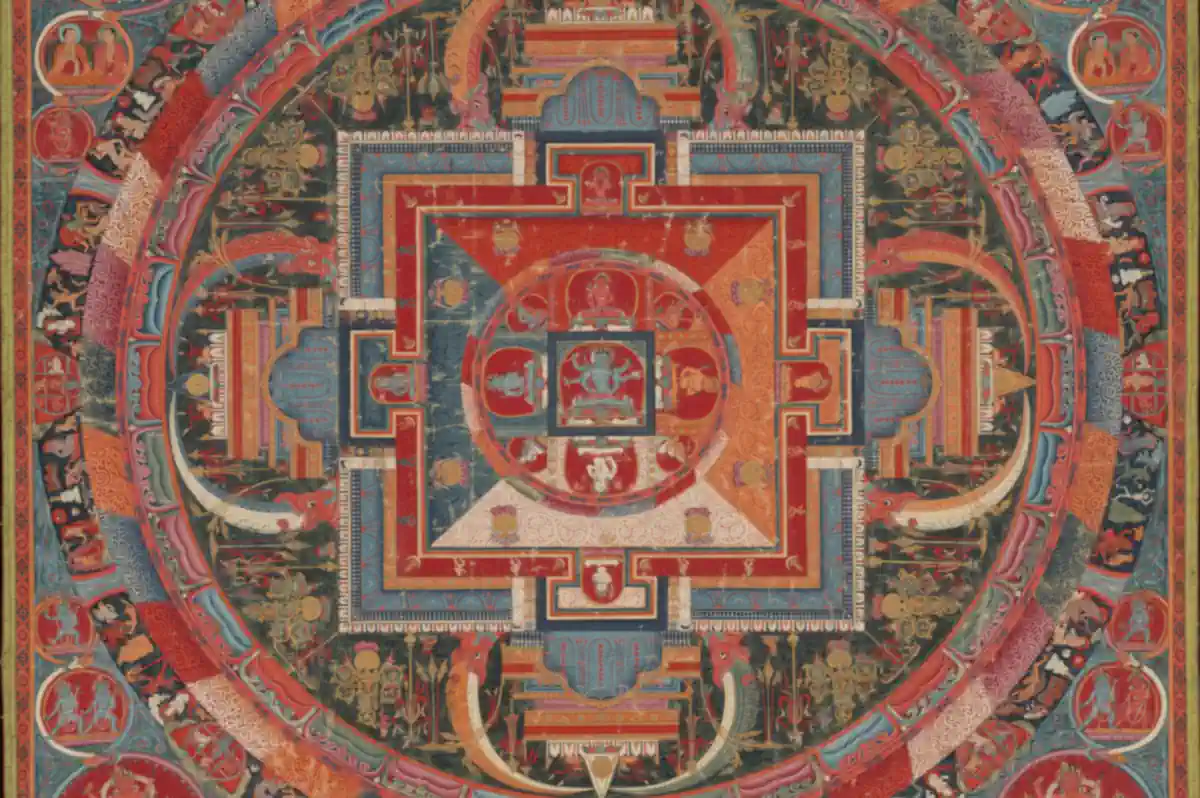
One of the most striking things about mystical experience is how it recurs across traditions separated by geography, language, and centuries. A thirteenth-century Sufi poet in Persia, a Christian contemplative in medieval Germany, a Hindu sage in ancient India, a Zen monk in Japan worked from different languages, beliefs and practices. Yet their descriptions of certain experiences are remarkably similar.
Each tradition understands these experiences in its own terms. Sufism speaks of fana, often translated as "annihilation" or "passing away"— the dissolution of the individual self into the divine. Christian mystics have written of unio mystica, mystical union with God. In Hinduism, the Upanishads describe the realization that the individual self (Atman) and the ultimate reality (Brahman) are one and the same. Buddhist traditions use different language again, sometimes speaking of awakening to Buddha nature or recognizing the empty and unbounded character of ordinary selfhood.
Meister Eckhart, writing in fourteenth-century Germany, described a state in which the eye he sees God with and the eye God sees him with are one eye. Rumi, three centuries earlier and a continent away, wrote of a love so complete that lover and beloved are no longer distinguishable.
These traditions are not making identical claims. A Christian mystic understands an experience through a Christian conception of God; a Sufi through an Islamic understanding of the divine; Hindu and Buddhist traditions may interpret apparently similar experiences in quite different ways. The differences matter. Yet beneath those differences, certain recurring features are difficult to miss: the weakening or disappearance of the usual sense of being a separate self, the dissolution of the boundary between self and other, and a sense that the distinction between the seeker and what is being sought has fallen away.
.This convergence does not prove that all mystics are accessing the same underlying reality. What it suggests is narrower and still remarkable — that human consciousness, under certain conditions, is capable of a mode of experience that runs deeper than the symbols and stories any one culture uses to describe it.
Are Psychedelic Mystical Experiences the Same as Spiritual Ones?
When people take psilocybin, LSD, ayahuasca, or similar compounds under supportive conditions, a significant number of them report experiences that sound strikingly like the accounts just described: a dissolution of the sense of self, a feeling of unity with everything, a conviction that something profoundly true has been revealed, emotions of awe and sacredness, and a near-total inability to put it into words afterward.
In recent decades, scientific research has turned serious attention to a question that was first explored — somewhat chaotically — in the 1960s: can psychedelic substances reliably occasion experiences that resemble the mystical states described by contemplatives and spiritual practitioners throughout history?
The evidence suggests they can. In a landmark 2006 study at Johns Hopkins University, Roland Griffiths and his team administered psilocybin to volunteers who had never used psychedelics, under carefully supportive conditions. The results were striking: 67% of participants rated the experience as "either the single most meaningful experience of his or her life or among the top 5 most meaningful experiences of his or her life" [4]. Participants reported experiences that closely matched the classic markers of mystical experience — unity, sacredness, noetic quality, transcendence of time and space, deeply positive mood, and ineffability [8].
The original experiment that opened this line of inquiry was the 1962 Good Friday Experiment, conducted by Walter Pahnke at Boston University's Marsh Chapel. Twenty divinity students were divided into two groups: half received psilocybin, half received niacin as an active placebo, during a Good Friday service. Eight of the ten students who received psilocybin reported mystical experiences. In a follow-up twenty-five years later, a majority of those who had received psilocybin still described the experience as "one of the high points of their spiritual life" [2]. The study was not without serious problems — the double-blind was effectively broken because the effects of psilocybin were unmistakable, and the researcher failed to report that one participant experienced severe anxiety and had to be physically restrained and given an antipsychotic medication [2]. These methodological shortcomings are important to acknowledge, but the core finding — that psilocybin could occasion experiences closely resembling classical mystical states — has been replicated in more rigorous modern research.
Importantly, when researchers have directly compared psychedelic-occasioned mystical experiences with those arising through non-pharmacological means — prayer, meditation, spontaneous episodes — the overlap is substantial. One study found that the psychedelic and non-drug groups "had so much in common that it appears psychedelics may be tools which facilitate the same phenomenon as naturally occurring God-encounter experiences" [10]. This does not mean the experiences are identical in every respect, but the core features measured by standardized instruments are remarkably similar.
Hopkins researcher Bill Richards has noted many resemblances between religious mystical experiences and how people feel during psychedelic use, going so far as to suggest that "whether occasioned by drugs or other means, these experiences of mystical consciousness are in all likelihood the primal basis of religion" [4]. The brains of advanced meditators also show a dampening of the default mode network, and when that activity drops, "the usual boundaries we experience between self and world, subject and object, all melt away" [4]. Non-duality, taught by Buddhists, is described as a feature of the mystical experience occasioned by psychedelics as well [12].
But resemblance is not identity. A contemplative tradition typically embeds its peak experiences within a long arc of ethical development, sustained practice, community accountability, and interpretive guidance. A psychedelic experience arrives in hours rather than years. It may produce a vivid phenomenological echo of what a Zen practitioner or Advaita teacher describes — but whether it constitutes the same realization, a temporary glimpse of it, or something categorically different remains genuinely unresolved.
Contemplative teachers themselves disagree. Some regard psychedelic states as legitimate openings — real glimpses that can motivate and orient a person's practice. Others view them as simulations: neurochemically induced states that mimic the surface of awakening without the stable transformation of character that traditions regard as its hallmark. Still others occupy a middle position, acknowledging that psychedelics may provide authentic insight while insisting that such insight requires integration within a sustained practice to become anything more than a memorable experience. Research on meditation as psychedelic preparation suggests that the two may act synergistically along a continuum of psychological development, and that embedding psychedelic experiences within a broader developmental trajectory may enhance their potential [9].
The honest answer is that no scientific instrument can settle this question, because it is partly a question about what counts as realization — and that is a matter each tradition defines on its own terms.
Why People Seek Mystical Experiences

People pursue mystical experience through meditation, prayer, fasting, breathwork, or psychedelics for many reasons, but a few themes recur. One is the relief of suffering. Disconnection from self, others, meaning, and spirituality has been identified as a predictor of mental health struggles. Mystical experiences, by their nature, tend to produce the opposite: a felt sense of connection, belonging, and significance.
Another reason is the desire for perspective. Many people describe coming away from a mystical experience with a fundamentally altered relationship to their own problems. Not because the problems disappeared, but because the sense of self that was organized around those problems loosened its grip. As one participant in an ayahuasca study described it: "After drinking ayahuasca, not drinking [alcohol] came naturally; there was no void that needed to be filled anymore."
A third reason is harder to articulate but may be the most important: the sheer depth of the experience. People who have had mystical experiences, whether through decades of contemplative practice or a single guided psychedelic session, frequently describe them as among the most meaningful events of their entire lives. That kind of significance is its own draw.
What the Research Shows About Mystical Experiences and Healing
A growing body of evidence suggests that mystical experiences occurring during psychedelic sessions are associated with positive therapeutic outcomes. A systematic review analyzing twelve studies of psychedelic therapy — using psilocybin, ayahuasca, or ketamine — found that ten of the twelve established a significant association between mystical experience and symptom reduction, across conditions as diverse as cancer-related distress, substance use disorders, and treatment-resistant depression[3].
Psilocybin for Cancer-Related Distress
In a study of cancer patients with life-threatening diagnoses, high-dose psilocybin "produced large decreases in clinician- and self-rated measures of depressed mood and anxiety along with increases in quality of life, life meaning, and optimism, and decreases in death anxiety." Critically, the researchers found that "mystical-type psilocybin experience on session day mediated the effect of psilocybin dose on therapeutic outcomes" [4]. In other words, it was not simply the drug that helped — it was the depth of the experience the drug made possible.
Long-Term Personality and Spiritual Change
Research has also found that long-term spiritual growth after psychedelic use "was often related to mystical experiences, with higher mystical experience ratings associating positively with perceived spiritual growth." And psychedelic experiences have been shown to facilitate enduring changes not just in mood but in personality traits — particularly openness — that were previously considered largely fixed after childhood [8].
Caveats and Study Limitations
These findings are promising, but they come with important caveats. Many studies have small sample sizes and limited demographic diversity. Several use open-label designs, meaning participants knew they were receiving the psychedelic, which introduces expectancy bias [3]. The subjective intensity of psychedelics makes true blinding exceedingly difficult [1]. The field is young, and the enthusiasm surrounding it sometimes outpaces the rigor of the evidence.
Risks of Seeking Mystical Experiences With Psychedelics
Psychedelics are not without danger, and honest conversation about their potential requires acknowledging this clearly.
Psychological Risks
The most significant risks are psychological. Psychedelic experiences can provoke intense fear, anxiety, paranoia, grief, and a sense of existential isolation. During sessions at Johns Hopkins, approximately thirty percent of participants reported psychological difficulties including fear, panic, despair, and a sense of dying [7]. In a large survey of recreational users, eleven percent reported putting themselves or others at risk of harm during a psychedelic experience [2].
Spiritual Bypassing and False Insight
There is also the risk of what researchers have called spiritual bypassing — becoming "hyper-spiritual and detached from reality" — as well as ego inflation, grandiosity, and emotional destabilization after sessions. The possibility of false insights has been recognized: the cognitive flexibility psychedelics induce can make people more open, but also potentially more susceptible to undue influence or unfounded beliefs. Rare but serious risks include psychotic episodes, hallucinogen persisting perception disorder, and the emergence of previously unknown traumatic memories that may be difficult to integrate [5] [7].
Why Set and Setting Matter
These risks are significantly amplified by adverse contexts — taking psychedelics without adequate preparation, support, or screening. Set and setting matter enormously. A person's mindset, the physical environment, the presence or absence of a skilled guide, and their psychiatric history all shape the experience in powerful ways. Psychedelics can destabilize the self-concept, and as one source notes, "the challenge for therapeutic and philosophical inquiry lies in integrating these experiences in a way that supports lasting psychological growth."
Integration: Why Psychedelics Are a Tool, Not a Shortcut
Perhaps the most balanced way to think about psychedelics and mystical experience is captured by a participant in one study of entheogenic spirituality — people who use psychedelics for spiritual purposes:
"Psychedelics open up the natural ability to go inside. They are a key to the self and the spiritual. They are not a magic pill, you have to do the work yourself. Psychedelics do not do the work for you. They are a key to open up the possibility. They show you how the mountain top looks like but you have to climb to the top yourself" [10].
This is consistent with what contemplative traditions have taught for centuries. The experience itself — however profound — is not the end point. It is what you do with it afterward that matters. Integration, the process of making sense of the experience and weaving its insights into daily life, is where the real work begins. Without it, even the most profound mystical experience can fade into a vivid but disconnected memory, or worse, become a source of confusion and destabilization.
One of the fascinating things about human beings is that while each of us is unique, we are also very much the same. The mystic in a twelfth-century monastery, the meditator on a ten-day silent retreat, and the person lying on a couch in a clinical trial with an eyeshade and headphones — all three may arrive at the same fundamental recognition: that the self they took to be solid is more fluid than they imagined, that they are connected to something larger than their individual story, and that this recognition, once genuinely felt, can change how they live.
Whether psychedelics are a legitimate doorway to that recognition or a shortcut that misses something essential is a question each person — and each tradition — will answer differently. What the evidence increasingly suggests is that the experiences themselves are real, that they can produce lasting benefit, and that they deserve to be approached with both genuine openness and genuine care.
Common Questions
Can you have a mystical experience without psychedelics?
Yes — and for most of recorded history, that was the only route. The accounts left by Sufi, Christian, Hindu, and Buddhist contemplatives closely resemble what people describe today, and a study that directly compared drug-occasioned mystical experiences with those arising from prayer, meditation, and spontaneous episodes found the two groups had a great deal in common [10]. Meditation, prayer, fasting, and breathwork are all long-established paths to the same territory.
What percentage of people have a mystical experience on psilocybin?
No single figure applies — the proportion varies with dose, setting, screening, and the questionnaire used to measure it. What the research does report is depth of meaning: in the landmark Johns Hopkins work, psilocybin administered under supportive conditions occasioned experiences the researchers judged similar to spontaneously occurring mystical experiences, and sixty-seven percent of participants rated the session as either the single most meaningful experience of their life or among their top five [6] [8].
Are psychedelic mystical experiences dangerous?
They carry real psychological risk. Roughly thirty percent of participants in Johns Hopkins sessions reported difficulties including fear, panic, despair, and a sense of dying, and in a large survey of recreational users, eleven percent reported putting themselves or others at risk during an experience. Careful preparation, psychiatric screening, and a skilled guide reduce that risk substantially — but do not eliminate it [2] [7].
References
- The Role of Psychedelics in Contemporary Psychological and Interdisciplinary Inquiry — mdpi.com
- Psychedelics: Safety and Efficacy — pmc.ncbi.nlm.nih.gov
- Psychedelics, Mystical Experience, and Therapeutic Efficacy: A Systematic Review — frontiersin.org
- Secular Mysticism: Entanglements of Science and Religion in Psychedelic Medicine — link.springer.com
- Psychedelics, Harm Reduction, and Life's Big Questions — anthrosource.onlinelibrary.wiley.com
- Bellone Thesis, Harvard DASH — dash.harvard.edu
- The psychopharmacology of psychedelics: where the brain meets spirituality — doi.org
- A Phenomenology of Challenging Psychedelic Experiences: From Relational Trauma to Relational Healing — search.proquest.com
- Exploring the Interface of Meditation and Psychedelics — meditation.mgh.harvard.edu/
- The Lived Experience of Professional Mental Health Clinicians with Spiritually Significant Psychedelic Experiences — search.proquest.com
- Exploration of Mystical Experiences and Relationship Changes: An Ayahuasca Study — aura.antioch.edu
- Bridging Traditional Sacramental Use of Plant Medicine with Modern Clinical Models — /dash.harvard.edu/