
Choosing an Ayahuasca Retreat: What Nobody Talks About
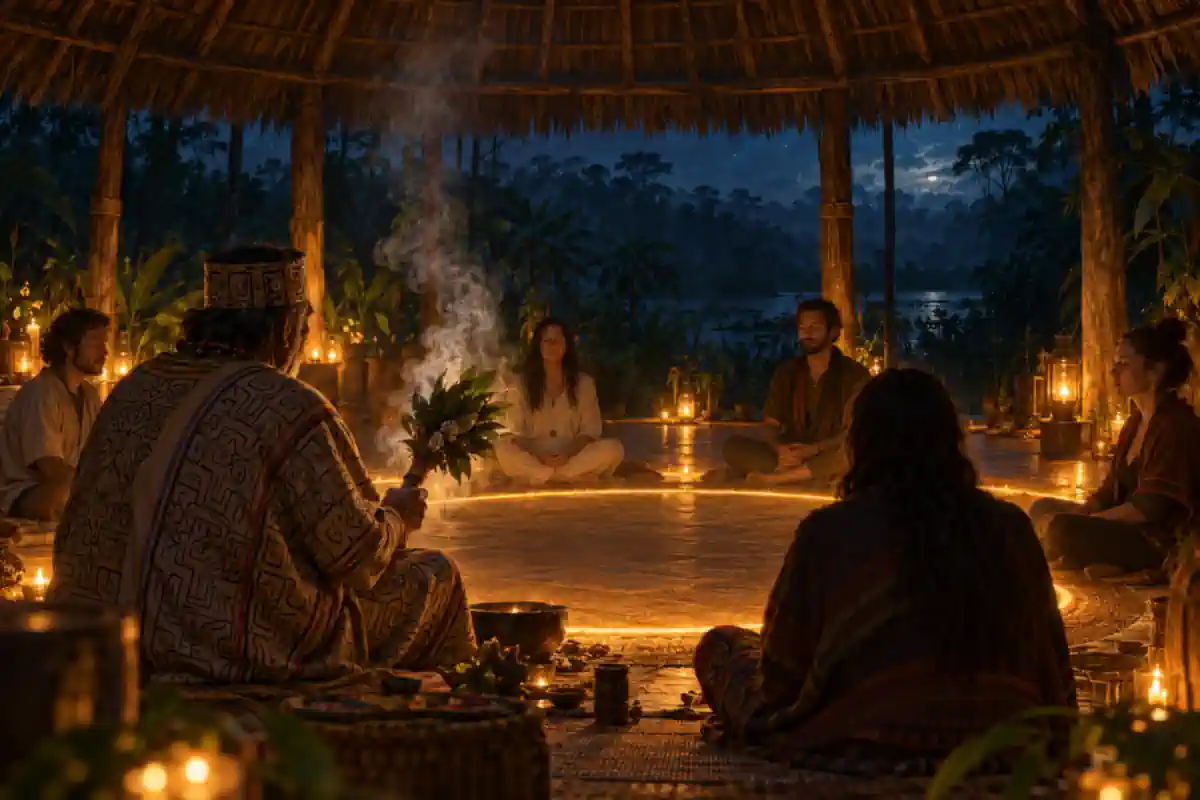
Search for "how to choose an ayahuasca retreat" and you'll find hundreds of pages, most of them saying much the same thing. Skilled healers. Thorough medical screening. Safety protocols, group size, integration support. All of it matters, and almost every credible guide mentions the importance of an experienced healer. Very few explain why.
Here is my answer, after running retreats since 2010. Of all the factors in choosing an ayahuasca retreat, the skill and integrity of the person leading ceremony matters more than all the others combined. The reason is the part nobody talks about: in the tradition we work in, the first job of the ayahuasquero is to protect you, and that protection depends on years of training under the guidance of someone who already knows. One needs to be protected, while learning to protect.
This article expands on the section on choosing a retreat in my longer guide to working with ayahuasca, with what other experienced people and researchers have found.
What the usual checklists leave out
The standard advice is good advice. If a center doesn't ask about every medication you take, it isn't a safe place to drink ayahuasca. There should be enough helpers in ceremony and a plan for medical emergencies. I cover these in the section on physical safety, and they deserve the attention they get. No amount of spiritual skill makes up for poor medical screening.
What the checklists leave out is energetic and spiritual safety. It's much less visible than physical safety, and in my experience it's just as important. It's also the area where the skill of the healer really shows.
What follows describes the traditional worldview of Amazonian healing as I've come to understand it over 16 years. If that framework doesn't fit your own beliefs, the practical advice in this article still holds. A highly trained and ethical healer is the safest choice, whatever you believe about spirits.
The healer's first job is protection
Here is how I've come to understand it, working alongside maestros for 16 years. Ayahuasca can open us to the spirit world in a way that few, if any, other substances do. Things exist in the spirit world that are not good for us. If someone is not well protected, a spiritual or energetic entity can "attach" to them.
In my experience, most of these are like energetic parasites, more like a flea or a tick than anything sinister. You certainly don't want them, but their effect is usually mild, if it's noticeable at all. Some are a bit stronger and can influence a person's emotions to generate the kind of energy they feed on. That can leave someone wondering, "Why do I feel this way?" or "Why did I act like that?" It's more of an occasional annoyance than an identifiable problem.
Then there are entities with a higher level of intelligence, closer to a very smart animal or even a human being. Those can create real problems in people's lives. They aren't common, but sometimes they are the primary reason for a person's troubles. They aren't "evil" in the way movies portray evil. They are simply following their nature, and the person they attach to just happened to be convenient.
The first two kinds are cleared in the normal course of ayahuasca ceremonies. The last kind almost always needs the focused attention of a healer skilled in entity removal. Most good healers who work with the spirit world have this ability, and if they don't, they'll be honest and refer you to someone who does. You don't need to come to an ayahuasca retreat to have one of these cleared. You do need a very good healer.
Besides the practical risks of falls and getting lost, the possibility of an entity attachment is one of the main reasons responsible centers ask you to stay in the maloca (the ceremony space) until the ceremony is over. The chance of meeting something troublesome if you ignore that guideline is small, but it's real, and there's no good reason to take that risk.
Most retreat centers don't talk about this openly because it tends to frighten people, and I agree with that decision. When skilled ayahuasqueros hold ceremony, the actual risk is tiny. What isn't well known is that the main role of the ayahuasquero is to keep the space safe. Healing is secondary, though it takes up most of their time.
Difficult feelings after a ceremony can have many causes, and it's important not to assume they are the result of a spiritual attachment. If fear, low mood or confusion persists after you get home, see a qualified mental health professional. Our integration article explains when to seek help, and what kind.
I'm not alone in describing the importance of protection. The anthropologist Evgenia Fotiou took part in more than 60 ceremonies with nine different shamans around Iquitos for her doctoral research. The people she worked with saw it the same way: the shaman is "responsible for protecting the ritual space," and "the ritual happens in an invisible circle that the ayahuasquero must keep protected at all times." She also recorded that cleansing, in their understanding, includes "the removal of entities from the participants' bodies during ceremony" [4].
Experiences like these also show up in the Global Ayahuasca Survey, which collected answers from more than 10,000 ayahuasca drinkers. About 15% of the 7,839 who answered its mental health questions said they had at some point felt "energetically attacked" or had a harmful connection with a "spirit world" after drinking. About 2.4% described it as severe [2]. The survey recorded what people experienced, not whether spirits were involved, but it tells you this isn't a rare or fringe experience.
Why this matters more now
In the past there was little need to warn people about any of this. In Peru before 2020, most ceremonies, and certainly the ones I knew, were held by ayahuasqueros who had trained for many years, and their skill was the protection. Since COVID, many newer centers have opened around the world. In October 2026, Retreat Guru alone listed more than 1,000 ayahuasca retreats. With that growth, the protection that used to come with the ceremony is no longer something you can assume.
Simona Adriani has been drinking ayahuasca since 2004. She completed a shamanic apprenticeship with the Shipibo-Conibo people and helped draft the first version of a code of ethics for ayahuasca facilitators. Her assessment of today's field is blunter than mine: "Most people working in this field are essentially making it up as they go along." On safety, she writes that knowing the medical contraindications by heart isn't enough, because the energetic and spiritual factors "cannot be contained or managed without some abilities that can be developed only through a shamanic apprenticeship." Describing the screaming and panic she has watched in some ceremonies, she puts it in one line: "You call it somatic release; I call it an inability to hold the space" [1].
The concern isn't new. Writing about Iquitos in 2010, Fotiou noted "many counterfeit or inexperienced shamans that have entered the profession for profit and do not look out for the benefit of the participants" [4]. In 2008, when Peru declared the traditional knowledge and use of ayahuasca part of its national cultural heritage, the resolution said (in English translation) that its aim was to protect traditional use, "differentiating it from Western uses out of context, consumerist, and with commercial objectives" [5].
Research can't measure a healer's skill directly, but two large studies point in the same direction:
- In the Global Ayahuasca Survey, people who drank in church settings reported the fewest mental health problems afterwards. Compared with those settings, the odds of problems were about a quarter higher with traditional shamans, more than half again higher with non-traditional facilitators, and about 70% higher with no guide at all [2]. Church drinkers differ in other ways too, so this can't be put down to leadership alone.
- A study of 6,877 drinkers found that drinking mostly in a country where ayahuasca is traditionally used was associated with lower psychological distress. The researchers included that measure because they assumed healers there would, on average, have more skill and knowledge, which they called "a difficult to measure component". Not every finding favored tradition: some traditional ceremony practices went with more extreme fear and poorer current mental health scores, but also with more reported improvement in prior anxiety or depression [7].
Both are surveys, so they show associations, not cause and effect, and the individual effects were small. A clinical trial of psilocybin for depression adds a different kind of evidence: the strength of the relationship between patients and the people guiding them predicted how much their depression improved [6]. That doesn't test shamanic protection, but it does show that who holds the space matters, whatever framework you use to explain it.
How to judge a healer before you book
You can't see protection from the outside. As Adriani points out, even the Westerners who run many centers often have no real way to evaluate the shamans they hire. So ask directly.
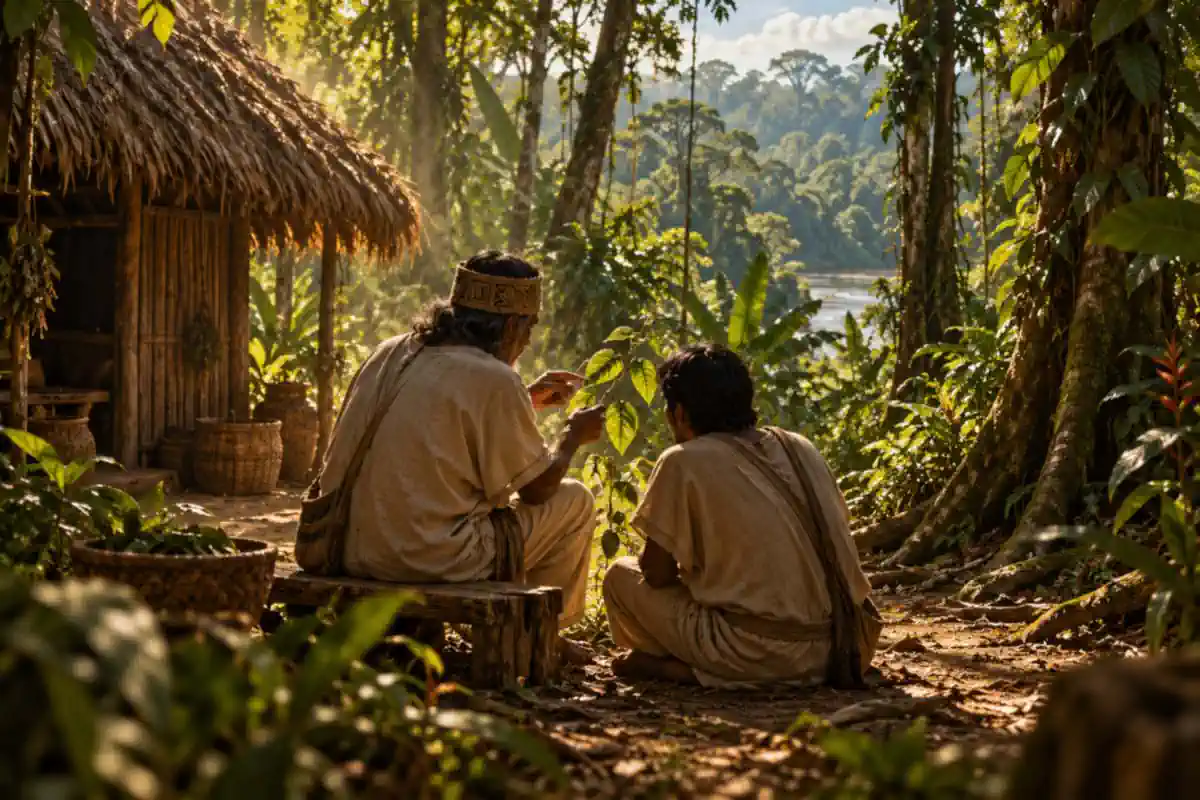
If the person leading ceremony has done at least a five-year apprenticeship in the Amazon with a master, you are likely in good hands as far as being protected. If they haven't, be careful. In Peru, apprenticeships usually run eight to ten years before the teacher gives the blessing to hold ceremony alone. Adriani gives a similar figure of seven to ten years in Indigenous cultures, and she would set the bar higher than I do: in her view, even five years isn't really enough. Five years is my minimum for protection, not proof that someone is ready. Fotiou describes becoming a master shaman as "the result of years of training and isolation" [4]. The stages of that training are described in The Shamanic Calling.
People can and do learn these skills in other traditions. Adriani writes that some of the best shamans she has met were Westerners who had the patience to complete a traditional apprenticeship. The key point is that it takes many years of practice protecting ceremonies under a maestro's care. There's no real substitute for that.
Integrity is the other half. A healer has a lot of power over people in a vulnerable state, and that power can be abused. The Chacruna Institute's guide on sexual abuse in ayahuasca settings describes healers who use "their position of power and responsibility to gratify personal sexual and/or power interests" [3]. Its practical advice is worth following whatever your gender.
Questions worth asking before you book:
- Who leads the ceremonies, how many years did they train, and with whom?
- Did their teacher give them the blessing to hold ceremony on their own, and how long ago?
- What happens if someone needs more help than the ceremony provides, whether medical, psychological, or spiritual such as entity removal?
- Who responds if someone becomes medically unwell or seriously distressed, and how far is the nearest hospital?
- Does the center ask about all your medications and health history?
- Will you ever be alone with the healer? The Chacruna guide advises against this, and against any healing that involves touching intimate parts of your body.
- How do you handle a complaint about a healer or staff member?
Check the reputation of the center and the healer, and talk to people who have been there, including women. Be wary of any center that can't tell you who trained its healer.
Experience and the depth of healing
Safety is the foundation. Beyond that, the healer's skill and experience can profoundly influence how deep the healing goes, often in ways the person receiving that healing never recognizes.
At the Hummingbird, all but one of the five ayahuasqueros we've worked with had more than 25 years of experience when they joined us. The exception was a younger healer with about 15 years. By any outside measure he did well. People felt safe, he held the space well, and guests went home happy. My wife Gina and I saw what they couldn't. Compared with what the older maestros had been doing, the depth of the healing wasn't close. Guests didn't notice because they had nothing to compare it with.
If you're bringing long-standing, complex problems and want the best opportunity for deep healing, I recommend looking for a healer with at least 25 years of experience. That's my personal rule, based on what I've observed since 2010, not a scientifically established cutoff. Experience alone doesn't guarantee mastery, but there's a depth of skill and understanding that takes decades to develop. And someone still developing their craft, however skilled and well-meaning, cannot yet offer what a true maestro can.
Frequently asked questions
Is ayahuasca spiritually dangerous?
In the traditional view, ayahuasca opens people to the spirit world, and an unprotected person can pick up an unwanted entity. With a skilled healer holding ceremony, and with participants staying in the ceremony space until it ends, that risk is very small. It's the main reason the healer's training matters so much.
How long does it take to become an ayahuasca healer?
In Peru, apprenticeships with a master usually last eight to ten years before the teacher gives permission to hold ceremony alone. As a minimum, I'd look for at least five years of apprenticeship in the Amazon, or many years of equivalent training in another tradition under someone who knows what they're doing.
Are Western ayahuasca facilitators safe?
Some are excellent. What matters is training, not nationality. A Westerner who has completed a long traditional apprenticeship can be as capable as any Indigenous healer, and being Indigenous doesn't automatically make someone a skilled or ethical one. Ask every center the same questions about training and lineage.
Do I need a healer with 25 years of experience?
Not necessarily. For exploratory goals or a lighter reset, a well-run newer center can serve you well. If you're carrying long-standing, complex problems, an experienced maestro makes a real difference, and the healing that's possible in that setting can go much deeper than most people expect.
Many things go into choosing a good ayahuasca retreat, and they all matter. I stand by my claim that the most important one is the skill and integrity of the healer. Choose a healer who has earned their place through years of training, alongside a center that takes medical safety seriously, and you're in the hands of people who know what they're doing. You also give yourself the best chance of the deepest healing ayahuasca can offer, the kind that's possible with a true maestro.
Ask us the same questions
Everything in this article applies to us too. You can meet our shamans and staff, see how long our healers trained and with whom, and ask us anything about how we hold ceremony before you decide.
References
- Adriani, S. (2026, March 7). The world of ayahuasca is not what you think. Medium. https://medium.com/@simonaadriani/the-world-of-ayahuasca-is-not-what-you-think-c7342258b4e9
- Bouso, J. C., Andión, Ó., Sarris, J. J., et al. (2022). Adverse effects of ayahuasca: Results from the Global Ayahuasca Survey. PLOS Global Public Health, 2(11), e0000438. https://doi.org/10.1371/journal.pgph.0000438
- Chacruna Institute, Ayahuasca Community Committee. (2020). Ayahuasca community guide for the awareness of sexual abuse. https://chacruna.net/community/ayahuasca-community-guide-for-the-awareness-of-sexual-abuse/
- Fotiou, E. (2010). From medicine men to day trippers: Shamanic tourism in Iquitos, Peru [Doctoral dissertation, University of Wisconsin–Madison]. http://www.neip.info/downloads/Fotiou_Ayahuasca_2010.pdf
- Instituto Nacional de Cultura, Peru. (2008). Resolución Directoral Nacional N° 836/INC: Declaran Patrimonio Cultural de la Nación a los conocimientos y usos tradicionales del Ayahuasca [English translation by Centro Takiwasi]. https://www.bialabate.net/blog-archive/news/ayahuasca-is-declared-cultural-patrimony-of-peru
- Murphy, R., Kettner, H., Zeifman, R., et al. (2022). Therapeutic alliance and rapport modulate responses to psilocybin assisted therapy for depression. Frontiers in Pharmacology, 12, 788155. https://doi.org/10.3389/fphar.2021.788155
- Perkins, D., Schubert, V., Simonová, H., et al. (2021). Influence of context and setting on the mental health and wellbeing outcomes of ayahuasca drinkers: Results of a large international survey. Frontiers in Pharmacology, 12, 623979. https://doi.org/10.3389/fphar.2021.623979